Origins and development
The program traces its botanical and pharmaceutical orientation to TEHNOFARM in 1992. Experience with externally sourced raw material in 1995–2008 highlighted variability in origin, composition and traceability. In 2009, the strategy shifted towards controlled cultivation and genetic selection. During 2011–2016, the research framework addressed climate adaptation, root structure, planting density and multi-year evaluation.
Seed-origin selection
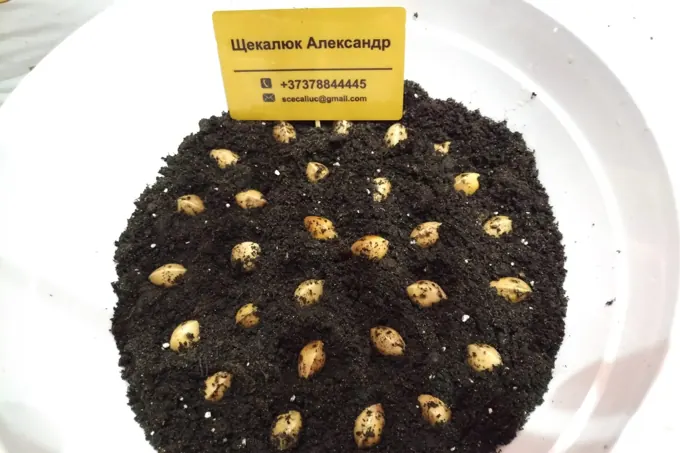
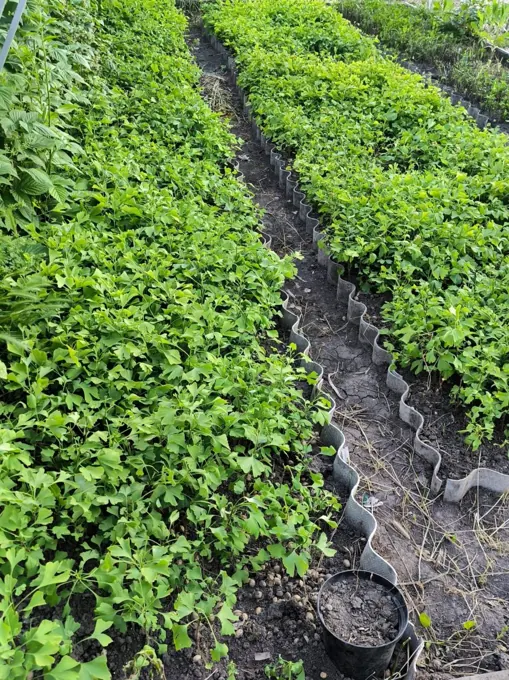
Approximately 5,000 plants completed a two-year nursery evaluation cycle. Selection considers vegetative vigor, symmetry, leaf formation and the relationship between root development and plant height. Early population diversity provides the basis for comparison and progressive selection.
The 2021 pilot plantation
A 0.3-hectare pilot plantation was established in the Corbu area of northern Moldova on 17 September 2021. The 1.0 × 0.5 m spacing corresponds to a theoretical density of approximately 20,000 plants per hectare, or 6,000 plants across the pilot area.
Open-field observation
The program reports winter exposure of approximately −22 °C during its 2021–2024 observation period, without artificial winter protection. Observations examine seasonal regeneration, winter survival and root stability. Field observations do not replace laboratory confirmation of raw-material quality.
Roots, uniformity and candidates
Root screening considers taproot development, lateral branching, root-mass distribution and proportional balance. Multi-year evaluation also compares leaf morphology, canopy symmetry and biomass formation. Twenty structurally promising candidates were identified from the nursery population; final selection remains subject to phytochemical analysis.
From selection to propagation
The roadmap schedules laboratory compound profiling for 2026 and in vitro clonal propagation from 2027, conditional on analytical results. The aim is reproducible planting material for controlled industrial leaf production.